Let’s start by answering a question. What is the running count in blackjack? When you’re counting cards in blackjack, the running count is the total value of the count, positive or negative, at any given time. This is the overall total used in the numerator when calculating the true count.
In the Hi-Lo system, whenever you see a 2,3,4,5 or 6, you will add 1 to your running count.
Whenever you see a 7,8 or 9, your running count will remain unchanged.
Whenever you see a 10,J,Q,K or A, you will subtract 1 from your running count.
A shorter notation would be:
- 2s-6s = +1
- 7s-9s = 0
- 10s-Aces= -1
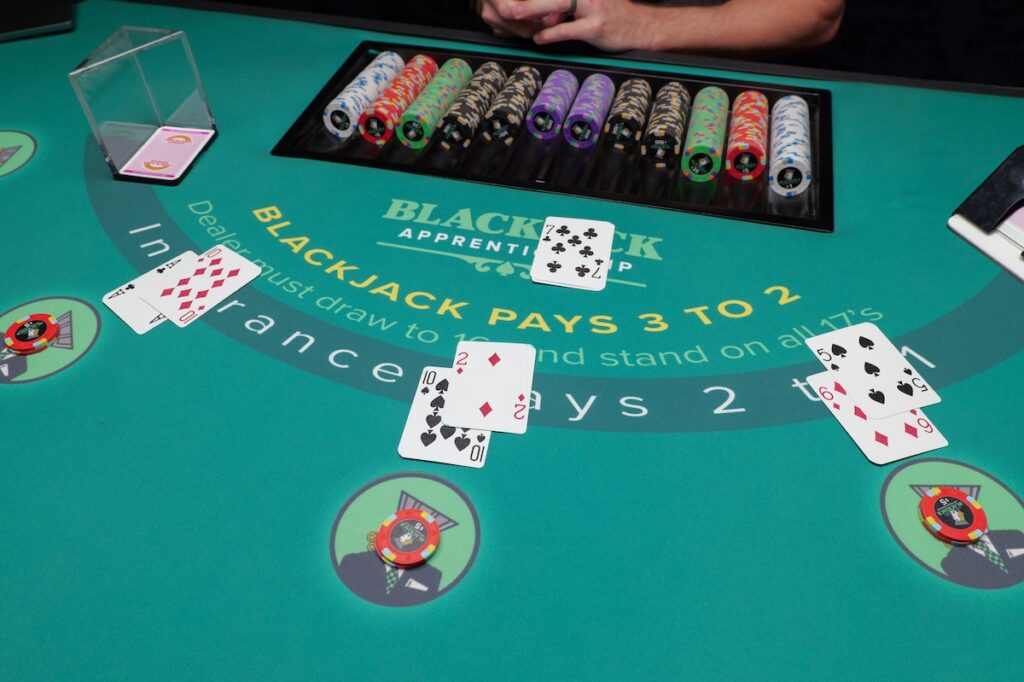
Let’s imagine you’re at a blackjack table with two other players. The first player has a 5 and a 6, for a total of 11, the second player has a 10 and a 2 for a total of 12, you have an Ace and a 10 for blackjack. The dealer is showing a 7.
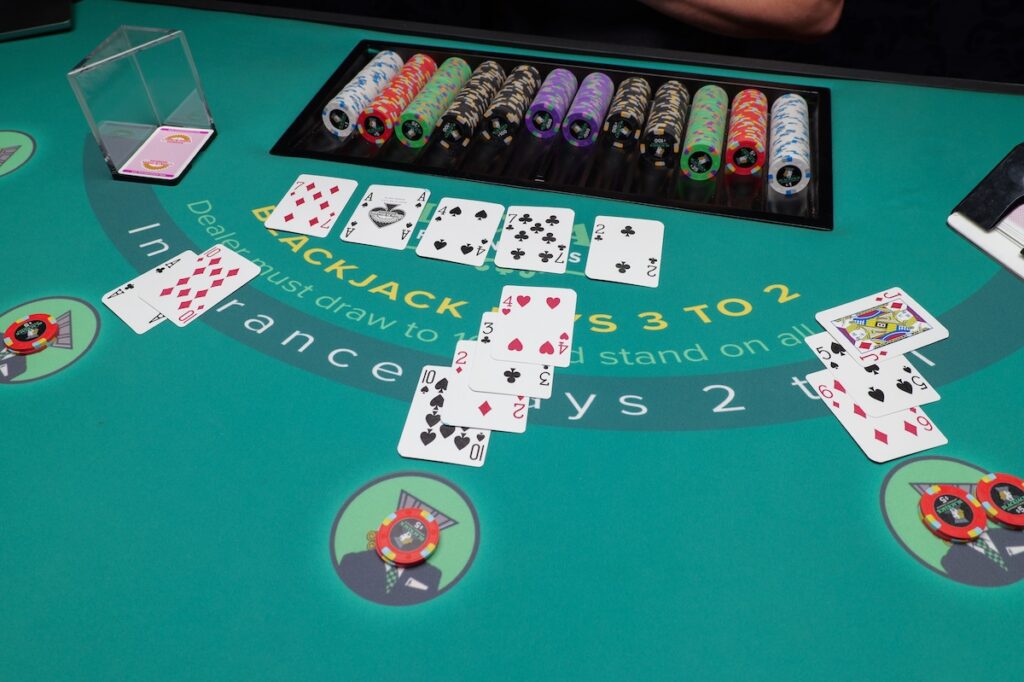
Starting from the right hand side of the table we count the first hand a 5 is +1, a 6 is +1, so we’re at +2. The next hand has a 10 and a 2, a -1 and +1, so they cancel out and we’re still at +2. We have a 10 and Ace, both -1. So we’re back to zero. The dealer’s card is a 7, which counts as 0, we’re still at zero. The first player doubles down, we see that the first player received a 10 for 21, we count the 10 as -1, which brings our count to -1. The second player hits their 12 and receives a 3, we add +1 and we’re back to zero, they hit their hand again and receive a 4, we add +1, now our running count is +1. Our blackjack gets put in the discard tray and the dealer begins to play their hand. Our count is +1, then the dealer turns over the hole card and we see a 2, we add another +1 and we have +2, they hit with a 4, we add another +1 and have +3, then they hit with an Ace, -1, now we have +2 again, and finally the dealer hits with another 7 for 21, the count is unchanged at +2.
Using that same round for our count, here’s how that might be done quickly. The counter waits for the 2nd card to hit the first player’s hand and then immediately adds the two +1s together for 2, then skips past the cards that cancel in the 2nd player’s hand and then subtracts the two -1s in their own hand to get to zero. After the first two cards of each hand, plus the dealer’s upcard are counted, the counter begins counting each card as it comes out. In our example we had a 10, followed by a 3, a 4, and then the dealer’s cards were a 2, 4, A and 7. In the counter’s head they count the cards individually, their internal monologue will sound something like this, using the above example “-1, 0, 1, 2, 3, 2, still 2”.
It’s not enough to just count one round at a time, we need to keep that running count going until the cards are shuffled together. Remember, we’re counting all the cards that have been removed from play.
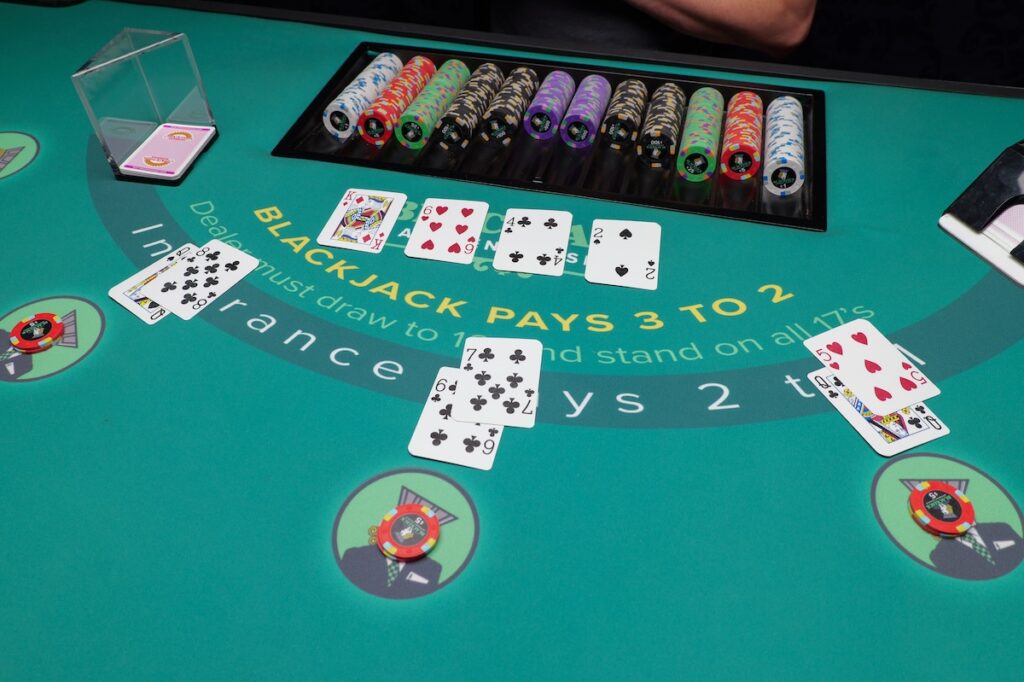
So let’s take our example from above, where we ended at +2, well we’ve got more cards to count. The card counter should have that +2 saved in their internal monologue. “+2, +2, +2”. Then we’ll go through the same process as the round before, counting from the time the first player receives their second card. The first player has a 10 and 5, so we cancel those out and stay at +2, the second player has a 6 and 7, now we have +3. Our hand is a 10 and 8, we’re back to +2. The dealer’s up card is a 4, and now we have +3 again. All the players stand, the dealer turns over a 2, +4, hits with a 6, +5, and just barely busts with a 10, +4.
Now we take that +4 and carry it on to the next round where we repeat the process.
Your running count is simply a representation of the ratio of small cards (2-6) to big cards (10-A) that have been played. If your running count is a positive number, that is how many more small cards have been removed from play than big cards. If your running count is a negative number, then that is how many more big cards have been removed from play than small cards. If your running count is zero, then exactly the same amount of big cards and small cards have been removed from play.
We should be counting all of the cards that are removed from the shoe, that includes our cards, other player’s cards, and the dealer’s cards. Since all of those cards come out of the same shoe.
As stated in the examples above, it’s worth repeating, the easiest way to count is to wait for that second card to hit the first player’s hand, which allows you to cancel any pairs of +1 and -1. Only after that will you start counting each card individually.
There are some actions that can make counting a little trickier. Pay special attention to any double downs that get placed face down, this can also happen on split aces, which only receive one card each. Make sure you don’t forget to count these cards at the end of the round when they get turned over.